
Quick Summary
The best commercial roofing companies are those that hold a current license, carry general liability and workers’ compensation insurance, and hold manufacturer certification for the roofing system they install. Verify each credential directly with the issuing authority or insurer, then compare bids line by line so every quote covers the same scope.
- Look up the contractor’s license number on the licensing authority’s public database and confirm it is active.
- Call the insurer on the certificate of insurance to confirm the policy is in force and matches the contracting company.
- Confirm the installers hold current manufacturer certification, since many warranties depend on it.
- Ask whether the warranty is material-only or labor-and-material, because the difference affects who pays for labor.
- Require written bids that separate tear-off, insulation, membrane thickness, flashing, permits, and warranty costs.
Table of Contents
- Why Choosing the Right Commercial Roofing Company Matters
- Commercial Roofing Contractor Qualifications to Verify
- Commercial Roof Cost: What Drives the Price and How to Compare Bids
- Commercial Roof Installation Timeline and Project Disruption
- Commercial Roofing Contractor Questions to Ask Before Hiring
- Warranties, Maintenance Plans, and Lifecycle Costs
- Scheduling a Roof Inspection and Requesting Your Free Estimate
- Frequently Asked Questions
Why Choosing the Right Commercial Roofing Company Matters
Your roof protects everything under it, so choosing among commercial roofing companies matters as much as the materials they use. Poor workmanship can lead to leaks and damage to the building below.
United Roofing of Colorado installs Duro-Last roofing systems for residential and commercial properties in central Colorado, and the questions below reflect common concerns property owners raise before hiring a roofer. Our comparison of Duro-Last and traditional flat roofing materials explains how the systems differ.
Flat and low-slope roofs in mountain climates face heavy snow loads, wind, and wide temperature swings. A structured comparison helps you avoid the confusion that comes from getting conflicting answers about the same leak.
Commercial Roofing Contractor Qualifications to Verify
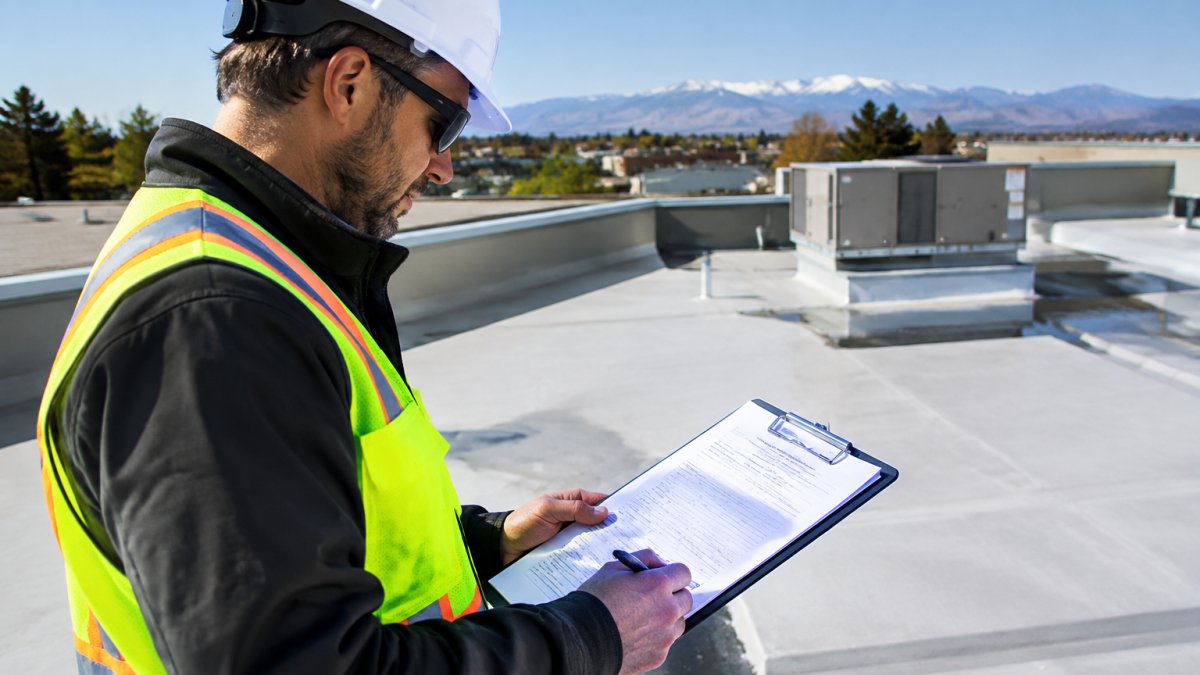
Before comparing prices, confirm that each company is qualified to do the work. Ask for documentation rather than verbal assurances, and verify the documents yourself rather than accepting a photocopy at face value. This section walks through what each qualification proves, how to check it, and what can go wrong if you skip it.
Licensing: What It Proves and How to Check It
A contractor license confirms the company has met state or local requirements to perform roofing work. Licensing rules vary by state and sometimes by municipality, and some jurisdictions require a separate license for commercial work. Ask for the license number and the name of the licensing authority, then look up the number directly on the authority’s public database. Confirm three things: the license is active, it is held by the company (not an individual who may not be on your job), and it covers the type of work you are hiring for.
Watch out: a contractor who provides a license number but discourages you from verifying it, or whose license is held by a different entity name than the one on the contract, is a warning sign.
General Liability Insurance: What the Certificate Actually Shows
General liability insurance protects you if the crew damages your building or a third party is injured on your property. Ask for a certificate of insurance (COI) and read it rather than filing it. Confirm the policy is current, the coverage limits are adequate for a commercial project, and the named insured matches the contracting company.
A common pattern is for a contractor to send a COI that has expired or that names a different company. Call the insurer’s number on the certificate to confirm the policy is in force.
Workers’ Compensation: The Coverage That Protects You
Workers’ compensation covers crew members injured on your roof. If a contractor lacks workers’ compensation, an injured worker may pursue a claim against you as the property owner, and those costs can be substantial. Ask for the workers’ compensation certificate and confirm it is current.
Manufacturer Certification: Why the Warranty Depends on It
Manufacturer certification means the installer has been trained to apply a specific roofing system to the manufacturer’s standards. You can learn what the system offers in our overview of the benefits of Duro-Last roofing systems. Certification matters because a manufacturer warranty often depends on installation by an approved contractor. Ask which manufacturer warranty the company can register for your project, whether the installers hold current certification for that specific system, and whether the warranty is a material-only warranty or a labor-and-material (NDL, or no-dollar-limit) warranty. Ask whether the warranty is a material-only warranty or a labor-and-material warranty, since the difference affects who pays for labor when a leak appears.
Experience, References, and the Questions That Reveal Both
Years in business matter less than years installing the specific system on your roof type. Ask how many flat and low-slope roofs the company has completed in the last two years and request references from projects similar in size and system to yours. Call the references and ask whether the project finished on schedule, whether change orders appeared, and whether the contractor returned for warranty issues.
Verify each item directly with the issuing authority or insurer before signing a contract.
The article lists the core qualifications to check and what each one proves before you compare prices.
| Qualification | What it proves | How to verify |
|---|---|---|
| Licensing | Company met state or local requirements | Look up license number on public database |
| General liability insurance | Protection if crew damages building or someone is injured | Read the certificate and call the insurer |
| Workers’ compensation | Crew injuries are covered, not your liability | Request current certificate |
| Manufacturer certification | Installers trained to the system standard | Confirm current certification for your system |
| Experience and references | Track record on similar roofs | Call references about schedule and warranty issues |
Commercial Roof Cost: What Drives the Price and How to Compare Bids
Commercial roof pricing depends on several cost drivers that vary building by building. Understanding those drivers lets you compare bids on equal footing instead of comparing bottom lines that cover different scopes.
The main cost drivers are:
- Roof area and geometry. Square footage sets the base material and labor quantity. Complex shapes, multiple levels, and many penetrations (HVAC curbs, vents, skylights) add labor hours per square foot.
- Roof system and membrane thickness. Membrane thickness (measured in mils) and attachment method (mechanically attached, adhered, or ballasted) change both material and labor.
- Tear-off versus recover. Removing the existing roof adds disposal and labor cost. A recover (installing over an existing roof) can reduce cost but is only allowed when building codes and the existing substrate permit it, and it may affect warranty eligibility.
- Insulation and code-driven R-value. Insulation requirements can affect the scope of a roofing project and whether a recover or full tear-off is needed.
- Flashing, drainage, and edge metal. New flashing, scuppers, drains, and edge metal are frequently excluded from low bids and added later as change orders.
- Access and staging. Limited roof access, occupied buildings, and equipment staging constraints add labor and scheduling cost.
- Labor market and season. Local labor availability and the construction season affect pricing; work scheduled in peak season or requiring overtime costs more.
Because these variables differ from one building to the next, fixed published prices are misleading. What you can do is require every bid to be broken out the same way so the numbers are comparable.
How to Compare Bids Line by Line
Ask each contractor to submit a written estimate with the following line items separated:
- Tear-off and disposal (or recover, with code justification)
- Insulation type, thickness, and R-value
- Membrane manufacturer, product name, and thickness in mils
- Attachment method
- Flashing, edge metal, and penetration details
- Drainage corrections
- Permits and inspection fees
- Warranty registration and manufacturer warranty level
- Labor, supervision, and project management
- Exclusions and allowances
A bid that omits insulation, flashing, or permit fees is not a lower price, it is an incomplete scope. Watch out: a contractor who will not put the membrane product name and thickness in writing is leaving you unable to verify what you are actually buying.
What to Ask About Price Without Asking for a Number
You can get useful pricing context before committing by asking each contractor:
- What is the typical range per square foot for a roof like mine, and what pushes it to the high or low end?
- Which line items are most likely to change once the roof is opened up, and how are those changes priced?
- Is the manufacturer warranty contingent on a specific insulation R-value or attachment method?
- What is the payment schedule, and how much is due before materials arrive?
Request a written estimate that breaks out materials, labor, permits, and warranty. For pricing specific to your building, contact United Roofing of Colorado for a quote.
Commercial Roof Installation Timeline and Project Disruption
Installation time depends on roof size, weather, and the scope of work. Smaller roofs may be completed in days, while larger projects can take several weeks. Mountain weather can delay work, so ask each company how they plan around snow and wind.
Ask these questions about disruption:
- How will the crew access the roof, and where will equipment be staged?
- Will any areas of the building need to be closed during work?
- How are tenants, employees, and customers notified?
- What happens if weather stops work mid-project?
Ask for a written schedule and a named project contact.
Commercial Roofing Contractor Questions to Ask Before Hiring
A short list of direct questions can reveal a great deal about a company:
- How many years have you installed this specific roofing system?
- Can you provide references from commercial projects in our area?
- Who will supervise the crew on site?
- What is your process if a leak appears after installation?
- Are your installers certified by the manufacturer?
- What does your warranty cover, and for how long?
Pay attention to specific answers. Vague responses such as “we do quality work” do not confirm experience or accountability.
Warranties, Maintenance Plans, and Lifecycle Costs
A roof warranty protects you only if you understand what it covers. Ask whether the warranty is from the manufacturer, the contractor, or both, and confirm what is excluded. Many warranties require periodic maintenance inspections to stay valid.
Lifecycle cost is the total cost of owning the roof over time, including repairs, maintenance, and eventual replacement. A slightly higher upfront cost can be the lower-cost choice if it extends roof life and reduces repairs. Ask any contractor you consider to explain their maintenance recommendations and how they affect warranty coverage.
Scheduling a Roof Inspection and Requesting Your Free Estimate
The simplest next step is to get a professional inspection. A roof inspection shows the current condition of the membrane, flashing, drainage, and penetrations, and it gives you a baseline for comparing bids.
United Roofing of Colorado offers a free roofing estimate. Contact our team to schedule an inspection and compare your options with clear, written scope. For more information about our flat roofing services, visit our website at unitedroofer.com.
Frequently Asked Questions
How do I verify a commercial roofer’s license and insurance?
Ask for the contractor’s state license number and look it up on the appropriate state licensing authority’s public database. Request a current certificate of insurance listing general liability and workers’ compensation coverage, and ask the insurer to confirm the policy is active. Call the insurance agent directly rather than relying on a copy the contractor sends. Commercial roofing companies that hesitate to provide these documents are a warning sign, and a legitimate contractor will supply them without delay before you sign any contract.
How long does a commercial roof installation take?
Timelines depend on roof size, the system chosen, weather, and how much preparation the existing roof needs. Smaller low-slope roofs may be completed in a few days, while larger commercial projects can take several weeks. Ask any commercial roofing company for a written schedule that shows start dates, expected completion, and contingency days for weather. A clear timeline also tells you how long parts of the building may be affected by noise, access restrictions, or temporary work zones.
What should I ask a commercial roofing contractor before hiring?
Ask how many years the company has installed the specific roofing system you need, and request references from recent projects of similar size. Confirm whether crews are employees or subcontractors, who will supervise the job, and what the warranty covers. Ask about manufacturer certification, your project’s safety and disruption plan, and how emergency leak repairs are handled after completion. Written answers to these questions make it easier to compare commercial roofing companies on equal terms.
Why does a commercial roof cost vary so much between bids?
Commercial roof cost depends on roof area, the membrane or system selected, insulation requirements, tear-off of existing layers, drainage work, and access constraints. Pricing also varies with labor availability, material delivery, and the scope each contractor includes. Two bids can look far apart when one covers full tear-off and new insulation while the other covers only the membrane. Compare line items rather than totals, and request a quote on the same written scope from every commercial roofing company you consider.
