
Table of Contents
- What Drives Commercial Flat Roof Replacement Cost
- Commercial Flat Roof Cost Per Square Foot
- Commercial Roofing Systems Cost Comparison
- Itemized Breakdown of a Commercial Roof Replacement Estimate
- Repair, Recover, or Replace: Decision Criteria
- Commercial Roof Replacement Timeline and Disruption Costs
- Lifecycle Cost and Return on Investment
- How to Compare Contractor Bids for a Flat Roof Replacement Cost
- Frequently Asked Questions
Last Updated: October 18, 2026
What Drives Commercial Flat Roof Replacement Cost
Commercial flat roof replacement cost is the total installed price of tearing off or covering an existing low-slope roof with a new waterproofing system, including labor, materials, deck repairs, insulation, and disposal.
Four variables move the price more than anything else:
- Roof area and shape. A large open roof is cheaper per square foot than a small one chopped up by skylights, HVAC curbs, and parapet walls.
- Tear-off versus recover. Removing the old roof adds labor and disposal. A recover saves money but only works when the deck and code allow it.
- Deck and structural condition. Rotted decking, saturated insulation, or ponding water turn a roofing job into a repair project.
- System choice. Membrane type, thickness, attachment method, and warranty length all shift the installed cost.
The Occupational Safety and Health Administration also shapes labor pricing on commercial work, because fall protection and staging requirements add cost that never appears on a homeowner quote.
Commercial Flat Roof Cost Per Square Foot
Roofers price flat roofs by the square, which equals 100 square feet. That means the commercial flat roof cost per square foot is simply the installed price divided by the roof’s total area, and it falls as the roof gets bigger.
Small roofs carry a higher per-square-foot price. Crews still need mobilization, staging, and a dumpster whether the roof is 2,000 square feet or 20,000. Spread those fixed costs over a bigger area and the number drops.
Why Per-Square-Foot Numbers Vary So Much
Quotes that look wildly different usually describe different scopes, not different profit margins. A low bid might exclude insulation, flashing replacement, or permit fees. A higher bid might include a full tear-off, new cover board, and a manufacturer’s warranty.
Ask every contractor what their per-square-foot number includes. If the answer is vague, treat the quote as incomplete.
Commercial Roofing Systems Cost Comparison
A commercial roofing systems cost comparison only works when every system is priced on the same scope. Comparing a fully adhered membrane against a mechanically attached one, or a recover against a tear-off, tells you nothing.
| System | Typical Installed Cost per Square Foot | Expected Service Life | Relative Maintenance | Best Fit |
|---|---|---|---|---|
| TPO single-ply (60 mil) | $5.50-$9.50 | 15-20 years | Low | Most low-slope commercial roofs; reflective surface |
| EPDM single-ply (60 mil) | $5.00-$9.00 | 20-25 years | Low | Large open roofs; cold climates |
| PVC single-ply (60 mil) | $7.00-$12.00 | 15-20 years | Low | Restaurants, grease exhaust, chemical exposure |
| Modified bitumen (2-ply) | $6.00-$11.00 | 15-20 years | Moderate | Small roofs, repairs, complex detailing |
| Built-up roofing (3-4 ply) | $7.50-$13.00 | 20-30 years | Moderate to high | Older buildings, heavy foot traffic |
| Standing seam metal | $9.00-$18.00 | 30-40 years | Low | Long-term ownership, steep or low-slope |
These ranges reflect installed cost, not material cost. Labor typically represents 40-60% of a commercial flat roof replacement, and that share rises on small or highly detailed roofs where crew time per square foot increases.
Single-Ply Membranes: TPO, EPDM, and PVC
Single-ply roofing dominates commercial work for good reason. These membranes are factory-made sheets, so quality control happens before the crew ever arrives. TPO has become the most common choice because it welds into strong seams and reflects sunlight.
On a like-for-like basis, the difference between a 60-mil TPO and a 60-mil EPDM system often comes down to seam method and reflectivity rather than raw membrane price.
Modified Bitumen and Built-Up Roofing
Modified bitumen and built-up roofing remain common on older buildings and small commercial structures. Both are multi-layer systems with proven track records. They also take longer to install, which raises labor costs.
Where modified bitumen earns its keep is on small roofs with heavy detailing, parapets, curbs, and penetrations, where the material’s ability to be torched or adhered in tight spaces reduces labor.
How to Read These Ranges
The lower number may assume a recover over sound insulation; the higher number may include a full tear-off, new cover board, and upgraded flashing. Before comparing systems, confirm that every bidder is pricing the same tear-off scope, the same insulation R-value, and the same warranty tier. A system comparison is only useful when the scope behind each number is identical.
Itemized Breakdown of a Commercial Roof Replacement Estimate
A commercial roof replacement estimate should list every line separately. When a contractor hands you one lump sum, you cannot tell where the money goes.
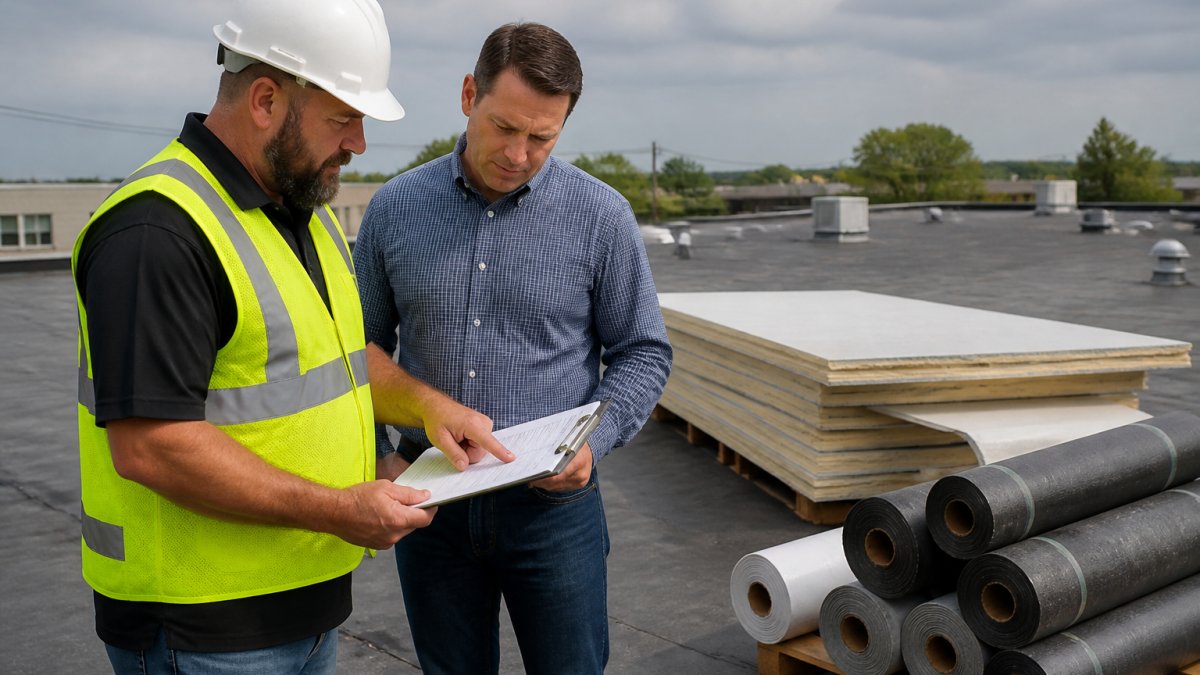
Expect these line items on any complete bid:
- Tear-off and disposal. Labor to remove the old roof, dumpster rental, and landfill fees.
- Deck inspection and repair. Priced per sheet of decking replaced, quoted after tear-off.
- Insulation and cover board. R-value requirements drive thickness and cost.
- Membrane and attachment. Material, plus adhesive or fasteners.
The most common mistake we see is a bid with a single “deck repair” line and no unit price. If the crew finds soft decking, you have no way to judge whether the added charge is fair. Demand a per-sheet price before signing.
Repair, Recover, or Replace: Decision Criteria
Replacement is the right call when the roof is at the end of its service life, when leaks keep returning in new spots, or when the deck and insulation are saturated. Repair fits isolated damage on a roof with years left.
Use this test:
- Is the existing roof less than 15 years old with one isolated leak? Repair.
- Is the membrane sound but the insulation wet? Partial replacement.
- Has the roof been patched repeatedly in different areas? Replace.
- Does the deck flex or feel soft underfoot? Replace, not recover.
- Does local code limit the number of roof layers? Check before choosing recover.
Recover saves money on tear-off and disposal, but it locks in whatever problems sit underneath. We rarely recommend it when the deck condition is unknown.
Commercial Roof Replacement Timeline and Disruption Costs
A typical commercial roof replacement timeline runs one to three weeks for a mid-size building, and longer when the scope includes extensive deck repair. Weather, crew size, and roof complexity all move that window.
Disruption costs rarely appear on a quote, yet they are real. A roof replacement can close sections of a building, block parking, and create noise during business hours.
Schedule membrane installation for a stretch of forecast dry weather and negotiate a phased schedule that keeps your entrances and loading dock open. A contractor who plans around your business hours is worth a higher bid.
Lifecycle Cost and Return on Investment
The cheapest bid is rarely the lowest lifecycle cost. A roof that fails in ten years costs more than one that lasts twenty, once you count repairs, interior water damage, and a second replacement. Most ranking pages stop at the installation price. The framework below turns lifecycle cost into something you can actually compare across bids.
The Four Cost Buckets of Roof Ownership
Every commercial flat roof carries four cost streams over its life:
- Initial installed cost. The bid you sign. This is the only number most owners compare.
- Maintenance and repair. Annual inspection, minor patching, and emergency leak response.
- Energy cost. Reflective membranes and added insulation reduce cooling loads. The savings depend on climate, roof insulation R-value, and HVAC efficiency, so treat any specific percentage as a site-specific estimate rather than a guarantee.
- Replacement and disruption. A shorter service life means a second replacement sooner, plus the business disruption that comes with it.
A Worked Lifecycle Comparison
The point is not that one system always wins. The point is that the bid price is one input, not the answer.
Warranty as a Financial Instrument
A manufacturer’s system warranty is only as strong as the installation behind it. Most manufacturers require certified installers and documented substrate preparation to honor a full system warranty. A no-dollar-limit (NDL) warranty transfers more risk to the manufacturer than a standard materials-only warranty, and that difference has real value if a membrane fails in year twelve.
Ask each bidder three questions about warranty:
- Is this a materials-only warranty or a full system warranty?
- Does it include labor and tear-off if the membrane fails?
- Is the warranty transferable if you sell the building?
A transferable NDL warranty can support resale value, which is a return-on-investment factor that never appears on a roofing quote.
Energy Performance and ROI
Reflective single-ply membranes and added insulation can reduce cooling costs, but the return depends on factors outside the roofer’s control: climate zone, existing insulation levels, HVAC equipment, and utility rates. A credible contractor will model the insulation upgrade against your actual energy use rather than promise a blanket percentage. Ask for the assumed R-value, the proposed insulation thickness, and the basis for any savings claim.
Total Value, Not Lowest Price
The right comparison is total cost of ownership over the expected service life: installed cost plus maintenance plus energy plus the present value of a future replacement. A bid that is 20% higher but delivers five more years of service life and a stronger warranty can be the cheaper roof. Build the comparison before you sign, not after the first leak.
How to Compare Contractor Bids for a Flat Roof Replacement Cost
Compare bids line by line, not by the bottom number. The lowest total often hides exclusions that surface later as change orders.
Ask each contractor the same five questions:
- What is the per-square-foot price, and what does it include?
- Is tear-off included, and is disposal covered?
- What is the unit price for deck replacement?
- Which manufacturer system and warranty are you proposing?
- Who performs the work, and are the installers certified?
A flat roof replacement cost is only meaningful when every bidder prices the same scope. The Federal Trade Commission’s guidance on home improvement contracts is worth reading before you sign anything, because it covers the contract terms you should see in writing.
The best bid is the one you can read line by line, compare against the others, and hold the contractor to. Price matters, but scope clarity matters more.
Replacing a flat roof on a commercial building is a major decision, and the wrong contractor turns it into a recurring expense. United Roofing of Colorado has installed Duro-Last membrane systems since 2014, backed by more than 30 years of combined industry experience and a track record of prompt warranty service.
Frequently Asked Questions
What factors affect commercial flat roof replacement cost?
Roof area and building size set the baseline, but several variables move the final number: the roofing system you choose (single-ply membrane, modified bitumen, or built-up roofing), tear-off and disposal of the old roof, deck and insulation condition, drainage and flashing work, and access or safety requirements. Labor rates and regional pricing also vary. Two bids for the same square footage can differ substantially if one excludes tear-off, deck repairs, or warranty coverage. Ask for a line-item estimate so you can compare scope, not just the total.
What is the average commercial flat roof cost per square foot?
There is no single reliable figure. Installed cost per square foot depends on the membrane type, insulation thickness, tear-off requirements, and the condition of the roof deck. Lightweight recover projects land at the low end; full tear-off with structural repairs and premium membrane sit at the high end. Rather than anchoring on a national average, request a commercial roof replacement estimate based on your actual roof area, system choice, and scope of work. That gives you a number you can budget against.
How long does a commercial roof replacement take?
Most low-slope commercial replacements run from a few days to a few weeks, depending on square footage, weather, and whether the old roof is torn off or recovered. A small building may be completed in two to four days; larger roofs with complex drainage, skylights, or mechanical equipment take longer. Scheduling matters too: crews work in sections to keep the building watertight overnight. Ask your contractor for a written schedule that names the start date, phase milestones, and weather contingency.
Is it cheaper to repair or replace a commercial flat roof?
Repair wins when the problem is isolated: a flashing detail, a drain, or a small puncture. Replacement makes more sense when leaks recur across the field of the roof, the membrane is near the end of its service life, or saturated insulation is driving up energy costs. A useful rule of thumb is the 25% rule: if repairs approach a quarter of replacement cost, replacement usually delivers better value. Get an inspection first so the decision rests on roof condition rather than guesswork.