
Last Updated: November 7, 2026
Quick Summary
Flat roof repair is the right call when damage is isolated, the membrane is sound, and the roof has years of service left; replacement wins when damage is widespread, leaks keep returning, or the membrane is past its 15 to 25 year service life. If a repair costs more than about 30% of full replacement, replacement usually wins.
- Most flat membranes last roughly 15 to 25 years depending on material.
- Minor patch work typically runs $300 to $1,500, while major repairs reach $1,500 to $8,000 or more.
- Replacement averages $3,332 to $11,558, per Angi’s flat roof replacement cost data.
- If a moisture survey shows more than 25% of the roof is damp, replacement often beats re-covering.
- An overlay only works when the deck and insulation are dry and sound and code and the manufacturer allow it.
Table of Contents
- Flat Roof Repair vs Replacement: The Decision in Brief
- How to Tell If a Flat Roof Needs Replacing
- When Repair Is the Smarter Call
- Flat Roof Repair vs Replacement Cost
- Flat Roof Overlay vs Replacement: What the Extra Layer Buys You
- How Often to Replace a Flat Roof
- Get a Free Flat Roof Assessment
- Frequently Asked Questions
Flat Roof Repair vs Replacement: The Decision in Brief
Flat roof repair vs replacement is a decision that comes down to damage extent, roof age, and how often leaks return. According to Angi’s flat roof replacement cost data, replacing a flat roof runs $3,332 to $11,558 on average, so the stakes are real. At United Roofing of Colorado, we walk property owners through this call every week. Below, we’ll show you exactly how to judge your own roof, what each path costs, and when an overlay makes sense.
Here’s what most guides get wrong: they treat replacement as the default. It isn’t. A sound membrane with one isolated leak usually deserves a repair.
How to Tell If a Flat Roof Needs Replacing
A flat roof likely needs replacing when damage is widespread, leaks keep returning in different spots, or the membrane is brittle and past its service life. One localized problem does not justify a full tear-off.
Walk your roof and look for these signals:
- Recurring leaks in separate areas, not one repeat spot
- Widespread membrane damage: blisters, splits, and open seams across the field
- Ponding water that sits 48 hours after rain
- Soft spots underfoot, which point to wet insulation or deck damage
- Age: most flat membranes last roughly 15 to 25 years depending on material
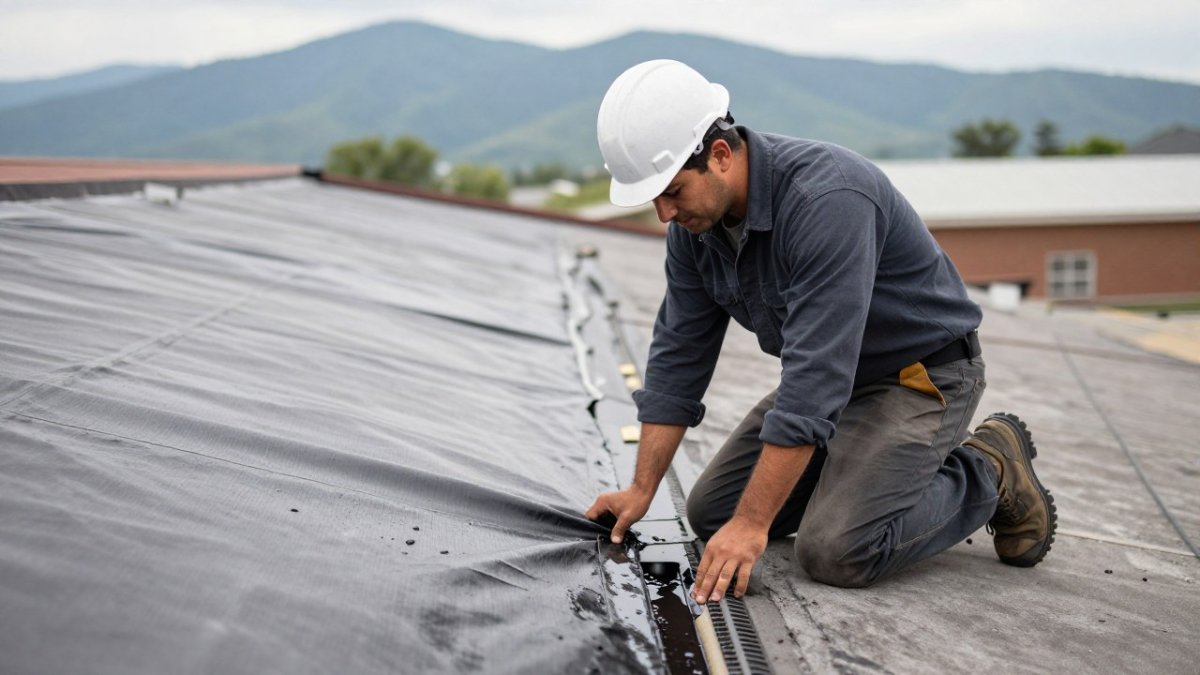
A moisture survey can find concealed damage a visual inspection misses. If a survey shows more than 25% of the roof is damp, replacement often beats re-covering, according to Best Roofing’s re-cover vs replacement guidance.
When Repair Is the Smarter Call
Repair is the smarter call when the damage is isolated, the membrane is otherwise sound, and the roof has years of service left. One contractor’s decision guide reports that roughly 30% of the roofs it evaluates genuinely need replacement, while the other 70% can be repaired, per Econo Roofing’s repair vs replace guide.
Repair makes sense when:
- The leak traces to a single seam, flashing point, or puncture
- The roof deck and insulation feel solid
- The membrane is pliable, not cracked
- The roof is well short of its expected lifespan
If you’re leaning toward repair, it helps to understand why flat roofs leak in the first place, so you can judge whether a patch will actually solve the problem or just move it.
Flat Roof Repair vs Replacement Cost
Repair costs far less than replacement on a per-job basis, but the gap narrows once repairs pile up, and the real comparison is lifecycle cost per square of roof, not the invoice in front of you. Minor patch work typically runs $300 to $1,500, while larger membrane repairs reach $1,500 to $8,000 or more, according to Roof Repairs CA’s flat roof repair pricing. Replacement averages $3,332 to $11,558, per Angi’s flat roof replacement cost data.
Those averages hide most of the decision. Flat-roof pricing is driven by square footage, membrane system, tear-off versus overlay, and how much wet insulation or decking has to come out. A practical way to compare is to price both paths on the same roof size and system:
| Cost driver | Repair | Replacement (tear-off) | Overlay (recover) |
|---|---|---|---|
| Typical range | $300-$1,500 minor; $1,500-$8,000+ major | $3,332-$11,558 average | Usually below full tear-off; varies by system and layers |
| Priced by | Per leak, seam, or flashing point | Per square (100 sq ft) of roof area | Per square, plus prep and code review |
| Insulation and deck | Rarely touched | Replaced where wet or damaged | Must be dry and sound or overlay is disallowed |
| Disruption | Hours to a day | Several days | Fewer days than tear-off |
| Lifespan added | A few years | Full new service life | New membrane life, minus existing layers |
| Warranty | Usually workmanship-only | Full system warranty available | Limited by existing roof and code |
A useful rule of thumb: if a repair costs more than about 30% of full replacement, replacement usually wins, especially on an older roof, per RealCostIQ’s repair vs replace framework. Run that math on your actual square footage rather than the national average, because a 2,000-square-foot roof and a 20,000-square-foot roof land in very different places on the same per-square pricing.
The lifecycle view matters more than the sticker price. A $900 patch that buys three years on a membrane with eight years left is a reasonable spend; the same $900 patch on a 22-year-old membrane that will be torn off next spring is money you will not recover. Add up repair spending over the remaining service life and compare it to the replacement number, then weigh the disruption and the risk of interior damage during another leak season.
Watch out: a repair quote that is unusually low may exclude decking or insulation replacement, and those costs can surface after the membrane is opened. Ask any contractor to itemize wet insulation removal and deck replacement before you compare bids.
For commercial buildings, our commercial flat roof replacement cost guide breaks down pricing by system and roof size in more detail.
Flat Roof Overlay vs Replacement: What the Extra Layer Buys You
An overlay, also called a recover, adds a new membrane over the existing roof without a tear-off. It costs less and disrupts less than a full replacement, but it only works when the deck and insulation underneath are dry and sound, and when the building code and the membrane manufacturer both allow it. That second condition is where most overlay plans fail, and it is the part most repair-vs-replace guides skip.
Start with moisture, not price. An overlay is not a fix for wet insulation. Trap moisture under a new layer and it keeps rotting the deck from below while the new membrane hides the evidence. A visual inspection cannot confirm the substrate is dry; an infrared scan, a nuclear moisture meter, or a few core cuts can. If a moisture survey shows more than 25% of the roof is damp, replacement often beats re-covering, according to Best Roofing’s re-cover vs replacement guidance. Core cuts also reveal whether the existing layers are asphalt-based, which affects what can legally go on top.
Code and fire requirements decide whether an overlay is even legal. Most model codes limit how many roof layers a structure can carry, and some jurisdictions require a tear-off once a second layer is added. Fire-resistance ratings for roof assemblies are tied to specific layer combinations, so adding a membrane over an existing assembly can void the rating the building was approved under unless the manufacturer lists that exact buildup. Structural capacity matters too: every added layer is dead load, and older decks may not have the reserve for another membrane plus insulation. Check with the local building department before you price an overlay, because a recover that fails plan review costs more than the tear-off you were trying to avoid.
Membrane system changes the answer. A recover over an existing EPDM, TPO, PVC, modified bitumen, or built-up roof is not a universal yes:
- EPDM and TPO: manufacturers typically publish specific recover assemblies and require a compatible separator or cover board over the old membrane; adhesive compatibility and seam orientation matter.
- PVC: plasticizers can migrate from an old PVC membrane into some new materials, so a separator layer is often required before a recover.
- Modified bitumen and built-up roofing: these are the most common recover substrates, but the existing surface must be clean, dry, and free of gravel or loose surfacing, and the number of existing plies counts against code layer limits.
- Any system over wet insulation: no manufacturer will warrant a recover over a wet substrate, regardless of membrane type.
Warranty and insurance follow the same logic. A full tear-off and replacement is the path to a new manufacturer system warranty covering membrane and labor. On the insurance side, a recover that leaves concealed damage in place can complicate a later claim, and some carriers ask whether the roof was recovered or replaced when pricing a policy. If you are weighing materials for a new layer, our comparison of Duro-Last vs traditional flat roofing materials covers how each system performs.
Watch out: an overlay bid that does not include a moisture survey, a code check, and the manufacturer’s written recover assembly is a bid you cannot compare to a tear-off. Ask for those three items in writing before you sign.
How Often to Replace a Flat Roof
Most flat roofs need replacing every 15 to 25 years, depending on membrane type, drainage, and maintenance. A roof that’s patched repeatedly and still leaking is telling you it’s near the end.
Preventive maintenance stretches that window. Clearing drains, resealing seams, and fixing ponding early add years of service. When replacement is on the horizon, know what roofing warranty coverage to expect, since warranty terms affect how you time the job.
Get a Free Flat Roof Assessment
The fastest way to settle repair vs replacement is a professional assessment. A contractor can check the membrane, probe for wet insulation, and confirm whether a repair will hold.
At United Roofing of Colorado, we’re certified Duro-Last installers with over 30 years of combined industry experience. We focus on prompt, reliable service, convenient scheduling, and efficient project turnaround. If you’re ready to act, explore our professional flat roofing services and book an assessment near you.
Not sure whether your roof needs a patch or a full replacement? United Roofing of Colorado can inspect your flat roof, identify the real cause of the problem, and give you a straight answer. As certified Duro-Last installers, we bring high-quality materials and efficient turnaround to every job. Get started with United Roofing of Colorado and get a clear plan for your roof.
Frequently Asked Questions
How do you know if a flat roof needs repair or replacement?
Start with the damage pattern. A single isolated leak, a failed seam, or flashing damage on a roof that is otherwise sound usually calls for flat roof repair. Widespread membrane damage, wet insulation, or leaks that keep returning after repairs point toward replacement. A moisture survey helps settle it. An inspection also checks roof age, deck condition, and drainage before you commit.
Is it cheaper to repair or replace a flat roof?
Repair typically costs less up front than replacement. Pricing depends on roof size, membrane system, and the extent of the damage, so request a quote for your specific roof. The cheaper choice long term depends on remaining service life. When a repair is expensive relative to the roof’s remaining life, replacement often delivers better long-term value.
How often should a flat roof be replaced?
Most flat roof membranes last roughly 15 to 25 years with regular maintenance, though traffic, ponding water, and freeze-thaw cycles shorten that. Rather than counting years alone, watch condition: recurring leaks, soft spots underfoot, blistering, and wet insulation all signal the end of useful service life. Annual inspections catch these early. If your roof is past 15 years and repairs are stacking up, ask a contractor for a remaining service life estimate before another repair.
Is a flat roof overlay better than a full replacement?
An overlay adds a new membrane over the existing roof, which costs less and creates less disruption than a tear-off. It only works when the deck and existing insulation are dry and sound, and when local building codes allow another layer. A moisture survey is essential, because trapped water under an overlay ruins the new membrane. If the insulation is wet or the roof already carries the maximum layers allowed, full replacement is the safer choice.
