
Last Updated: November 1, 2026
Quick Summary
The strongest roofing alternatives for commercial flat roofs include United Roofing of Colorado, a certified Duro-Last installer, plus research resources like American WeatherStar, Flat Roofs R Us, and Roof Maxx. We scored each option on commercial system expertise, estimate transparency, contractor vetting and warranties, lifecycle cost thinking, and business identity clarity.
- United Roofing of Colorado is locally owned since 2014 with over 30 years of combined industry experience.
- Ask every contractor for a state license, certificate of insurance, and a sample workmanship warranty.
- An estimate that lists one lump sum instead of an itemized scope is a red flag.
- Confirm the exact Riley’s Roofing business, license number, and service area before comparing quotes.
- American WeatherStar and Flat Roofs R Us are research resources, not installation contractors.
Table of Contents
- Why Commercial Property Owners Look Beyond Riley’s Roofing
- How We Evaluated These Commercial Roofing Alternatives
- 1. United Roofing of Colorado: Certified Duro-Last Installation
- 2. American WeatherStar: A Research Resource on System Types
- 3. Flat Roofs R Us: TPO and PVC Material Guidance
- 4. Roof Maxx: When Replacement Isn’t the Only Option
- Commercial Roofing Systems for Flat Roofs: What Actually Fits Your Building
- Commercial Roofing Contractor Questions to Ask Before You Sign
- Frequently Asked Questions
Why Commercial Property Owners Look Beyond Riley’s Roofing
Commercial property owners searching for a roofing alternatives option often start with a local name and then discover the field is wider than expected. Commercial roofing covers the design, installation, repair, and maintenance of roof systems on low-slope and flat commercial buildings. Riley’s Roofing is a recognized name, but owners with flat roofs, chronic leaks, or warranty worries frequently widen their search.
We at United Roofing of Colorado built this comparison because the stakes are high. Below, we break down seven alternatives, the vetting questions that matter, and how to judge a commercial roofing estimate checklist before you sign anything.
How We Evaluated These Commercial Roofing Alternatives
Most search results for this query are loose local listings, review pages, and social recommendations rather than a structured comparison. We built this section to fix that: a side-by-side view of the options a commercial owner is likely to encounter, scored on the criteria that actually decide whether a roof performs.
We scored each option on five criteria:
- Commercial system expertise, Does the provider handle flat and low-slope systems (TPO, PVC, Duro-Last, EPDM, modified bitumen, built-up, metal), or only steep-slope shingles?
- Estimate transparency, Will they itemize membrane, insulation, flashing, tear-off, and disposal, or quote a single lump sum?
- Contractor vetting and warranties, Are they licensed and insured, and do they offer a written workmanship warranty separate from the manufacturer’s material warranty?
- Lifecycle cost thinking, Do they discuss expected service life, preventive maintenance, and long-term ownership cost, not just first-day price?
- Business identity clarity, Several businesses use the Riley or Riley’s name in different states. Confirm the exact company, license number, and service area before you compare quotes.
Some entries below are contractors; others are research resources that help you choose a system before you hire anyone. That distinction matters. A resource that explains TPO and PVC is not the same as a crew that installs them, and we say so plainly where the difference applies. We did not rank by price, because pricing depends on roof size, membrane type, insulation, access, and tear-off scope. Contact United Roofing of Colorado for a free estimate.
| Option | Type | Commercial Systems | Best For | Vetting Notes | Pricing Transparency |
|---|---|---|---|---|---|
| United Roofing of Colorado | Duro-Last contractor | Duro-Last single-ply; flat and low-slope | Owners wanting a certified single-ply install with manufacturer-backed warranty | Locally owned since 2014; 30+ years combined experience; ask for license and certificate of insurance | Free estimate on request; itemized scope |
| American WeatherStar | Research resource | Covers cool roofing, metal, liquid systems, built-up | Comparing system categories before hiring | Not a contractor; no installation or warranty service | Not listed |
| Flat Roofs R Us | Material guidance | TPO and PVC focus | Choosing between thermoplastic membranes | Not a verified contractor; use to sharpen questions | Not listed |
| Roof Maxx | Alternatives research | Repair, overlay, treatment framing | Exploring whether repair can delay replacement | Confirm commercial suitability in writing before relying on it | Not listed |
Before you compare any two quotes, ask each contractor for the same three documents: state license or registration, certificate of insurance showing general liability and workers’ compensation, and a sample workmanship warranty. A quote you cannot vet is not a comparable quote.
1. United Roofing of Colorado: Certified Duro-Last Installation
Our top pick for commercial flat roofs is United Roofing of Colorado, a locally owned and operated business established in 2014, with over 30 years of combined industry experience and certified Duro-Last installers.
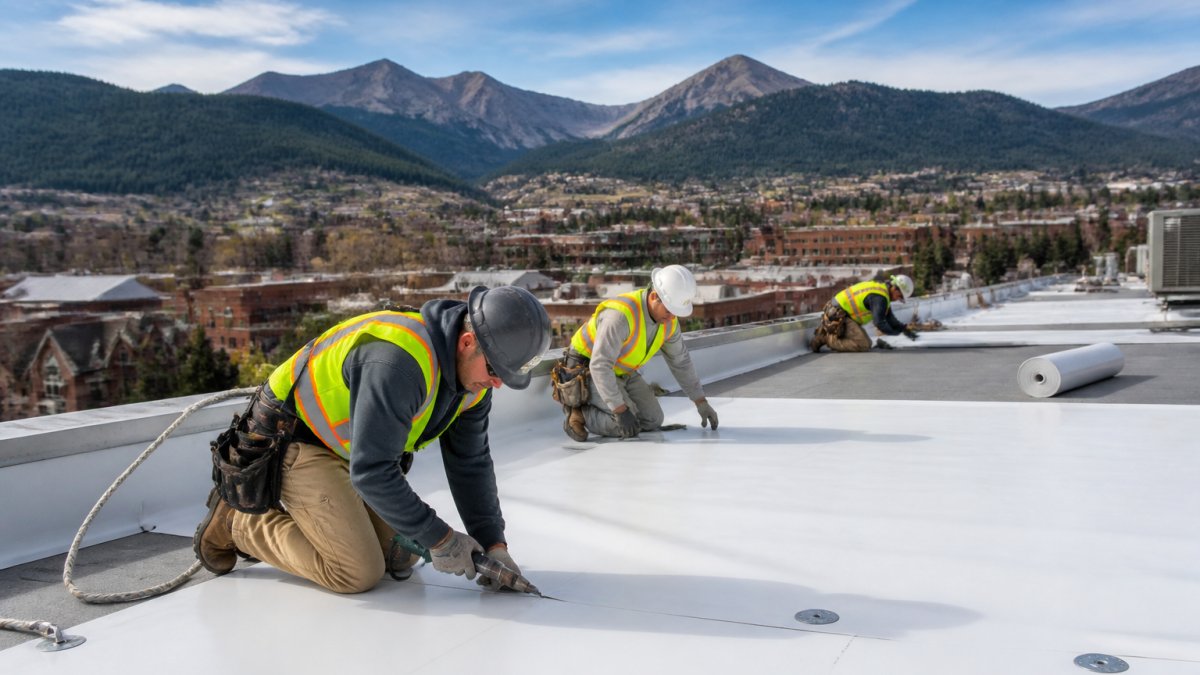
If you want the deeper case for the system, read the benefits of Duro-Last roofing systems explained.
Best for: Commercial and residential owners who want Duro-Last roofing systems installed by certified installers.
Skip if: You need a system other than Duro-Last.
2. American WeatherStar: A Research Resource on System Types
Best for: Decision-makers still deciding which system category fits their building.
Skip if: You already know your system and need an installer.
3. Flat Roofs R Us: TPO and PVC Material Guidance
Best for: Owners comparing membrane materials before requesting quotes.
Skip if: You want installation and warranty service in one place.
4. Roof Maxx: When Replacement Isn’t the Only Option
Best for: Owners exploring whether a repair can buy time.
Skip if: Your roof has active leaks or failed flashing, where replacement is the honest answer.
Commercial Roofing Systems for Flat Roofs: What Actually Fits Your Building
Flat roofs are not one product. Single-ply membranes like TPO, PVC, and Duro-Last suit many low-slope commercial buildings. Built-up roofing and modified bitumen remain common where durability and redundancy matter. Metal works where drainage and slope allow it. The right choice depends on your building’s structure, drainage, foot traffic, and how long you plan to own it. For real budget context before you compare, see our commercial flat roof replacement cost guide, and confirm the installation sequence against common flat roof installation mistakes.
Commercial Roofing Contractor Questions to Ask Before You Sign
A commercial roof is a long-term asset, and the questions you ask before signing separate a contractor who will stand behind the work from one who will disappear after the final invoice. Ask these in writing, and expect direct answers.
Licensing and insurance
- Are you licensed or registered to perform roofing work in this state, and what is your license number?
- Can you provide a certificate of insurance showing general liability and workers’ compensation coverage, with limits stated?
- Will you name the property owner as an additional insured on the certificate?
Estimate and scope transparency
- Is the estimate itemized by membrane, insulation, flashing, edge metal, fasteners, tear-off, and disposal?
- Does the scope state the membrane thickness and manufacturer, the insulation R-value, and the number of layers?
- Are permits, dumpster fees, and any required code upgrades (such as edge securement or drain upgrades) included or excluded?
- What is the payment schedule, and how much is due before materials arrive?
Warranty and workmanship
- What is the manufacturer’s material warranty term, and what is your separate workmanship warranty term?
- Is the warranty transferable if the building is sold, and what maintenance must the owner perform to keep it valid?
- Who handles a warranty claim, you or the manufacturer, and what is the response time?
Maintenance and lifecycle cost
- Do you offer a preventive maintenance plan, and what does it cover (drain clearing, seam inspection, flashing checks) and at what interval?
- What is the expected service life of the system you are proposing under local weather conditions?
- What is the realistic annual maintenance cost as a percentage of the installed cost?
Timeline and disruption
- What is the day-by-day installation timeline, and how will you protect tenants, inventory, and equipment during tear-off?
- What is your process if weather delays the schedule?
A roofing estimate that lists one lump sum is a red flag. So is a contractor who cannot explain the warranty transfer in writing. If leaks are already a problem, understand why flat roofs leak and how to fix them, and when you are ready to move, use our guide to professional flat roofing services near you.
Match the contractor to the building, not to the search result. A Duro-Last specialist is the right call for a low-slope single-ply install; a built-up or metal roof needs a contractor who installs those systems routinely. Confirm the exact Riley’s Roofing business and service area before comparing quotes, then hold every bidder to the same itemized scope and vetting documents.
Frequently Asked Questions
What should I compare when choosing a commercial roofing contractor?
Compare four things before anything else: licensing and insurance, manufacturer certification, warranty terms, and documented local project references. A certified installer can offer manufacturer-backed warranties that uncertified crews cannot. Ask for the certificate number, the insurance certificate with your building named, and two or three references from flat roofs in your area. Price matters, but a quote that is several thousand dollars lower usually reflects a thinner membrane, fewer fasteners, or no manufacturer warranty, all of which cost more over the roof’s life.
How do I find roofing alternatives for a commercial project when my current contractor isn’t working out?
Start with the system, not the company. Decide whether your building needs single-ply membrane, metal, or a coating, then look for contractors certified in that system. Manufacturer locator tools list certified installers by area. Ask each one the same five commercial roofing contractor questions about crew size, project schedule, warranty coverage, and who handles punch-list items. Comparing three bids on identical scope language gives you a real basis for a decision instead of comparing three differently worded estimates.
How long does a commercial roof installation take?
A commercial roof installation timeline should be written into the contract with a start date, a daily crew count, and a completion target. Ask what happens if weather delays the job and how the crew protects the deck overnight. Buildings that cannot close should ask for phased scheduling so sections are watertight before the crew leaves each day.
How much does commercial roof replacement typically cost?
Costs vary widely by roof size, membrane type, insulation thickness, and how much deck repair is needed, so any single number you see online is a rough starting point at best. What you can control is the estimate itself. Use a commercial roofing estimate checklist that requires line items for tear-off, disposal, insulation, membrane, flashing, and warranty. Ask each contractor to price the same scope so the numbers are comparable. United Roofing of Colorado offers a free roofing estimate.
What commercial roofing systems are available for flat roofs?
The main options are single-ply membranes such as Duro-Last, TPO, and PVC; modified bitumen; built-up roofing; metal; and fluid-applied coatings for roofs with remaining service life. Single-ply systems dominate new low-slope work because they install fast and handle ponding water well when seamed correctly. The right choice depends on slope, drainage, insulation needs, and how long you plan to own the building.
The difference between a roof that lasts and one that leaks again usually comes down to the installer, not the brochure. United Roofing of Colorado brings certified Duro-Last installation, over 30 years of combined experience, and prompt, reliable service with convenient scheduling. Get started with United Roofing of Colorado and request your free roofing estimate today.
