
Last Updated: November 10, 2026
Quick Summary
Most flat roof repair in Colorado fails because the repair treats a symptom while the cause keeps working, such as water pooling where the slope is wrong or seams opening in a freeze-thaw cycle. A proper repair starts with tracing the leak path and fixing drainage, not patching the first wet spot you find.
- Water that sits for more than 48 hours after rain works its way into seams and flashing.
- A patch only holds if it matches the membrane, so ask what membrane you have before approving any repair.
- Denver requires a permit once a repair touches more than 10% of the roof area or more than 200 square feet, whichever is smaller.
- Repair makes sense when the leak is isolated, the membrane has service life left, and the deck and insulation are sound.
- Document storm damage with dated photos and file the claim before you repair, since repairing first can void part of your claim.
Table of Contents
- Why Flat Roof Repair in Colorado Fails So Often
- Mistake 1: Skipping a Real Leak Diagnosis
- Mistake 2: Ignoring Flat Roof Drainage Problems
- Mistake 3: Patching the Wrong Membrane
- Mistake 4: Guessing at Flat Roof Repair in Colorado Cost
- Mistake 5: Getting Flat Roof Repair vs. Replacement Wrong
- Mistake 6: Treating Storm Damage as a DIY Job
- Mistake 7: Hiring on Price Alone
- Frequently Asked Questions
Why Flat Roof Repair in Colorado Fails So Often
Most flat roof repair in Colorado fails for one reason: the repair treats a symptom while the cause keeps working. Water pools where the slope is wrong, seams open in a freeze-thaw cycle, and a patch gets blamed for a problem it never had a chance to solve. According to a study of 497 flat-roof cases catalogued on ResearchGate’s durability record, construction flaws and maintenance strategy, not membrane age alone, drive most failures. Below, we walk through the seven mistakes we get called back to fix, and what to do instead.
Mistake 1: Skipping a Real Leak Diagnosis
The biggest mistake is patching the first wet spot you find. Water enters at a seam, flashing, or drain and travels sideways under the membrane, so the ceiling stain rarely sits under the actual hole. A proper flat roof leak repair starts with tracing the path, not sealing the stain.
How to Trace a Leak Safely Before You Call Anyone
- Note where the interior stain is and which way the ceiling slopes
- Check the roof surface above that area for blisters, open seams, or cracked flashing
- Look at drains, scuppers, and penetrations first, they leak most often
- Photograph everything before anyone touches it
- Stay off the roof in rain, snow, or wind, and never walk a wet membrane
If you are not comfortable on a ladder, stop there. A roofer can trace the source faster than you can guess at it. For a deeper walkthrough of causes, see why flat roofs leak and how to find the cause.
Mistake 2: Ignoring Flat Roof Drainage Problems
Standing water is the clearest sign of a flat roof drainage problems issue, and it is the one most owners wait out. Water that sits for more than 48 hours after rain works its way into seams and flashing. Ponding also adds weight and speeds up membrane breakdown.
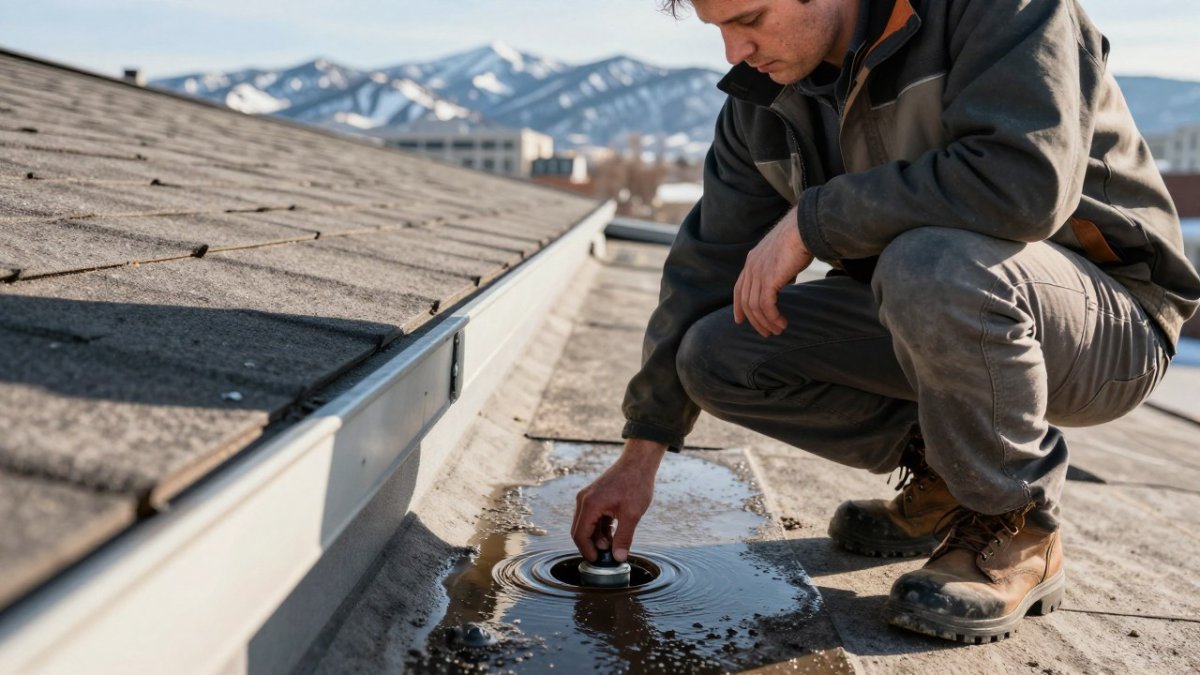
Reading Ponding Water, Slope, and Scuppers
A low-slope roof should shed water toward drains or scuppers within a day. If it does not, the fix is usually one of three things: a clogged drain, a sagging deck, or a slope that was never built correctly. Clearing debris is a maintenance task. Correcting slope or a failed drain is repair work. Watch out: sealing over a ponding area without fixing the drainage traps water under the new patch and guarantees a repeat leak.
Mistake 3: Patching the Wrong Membrane
A patch only holds if it matches the membrane it sits on. TPO, EPDM, modified bitumen, and metal roofing each need different materials and methods. A universal caulk or tar patch on a TPO or EPDM membrane often peels within a season because the surfaces do not bond the same way. Ask what membrane you have before approving any repair, and make sure the crew names the material and the method in writing.
Mistake 4: Guessing at Flat Roof Repair in Colorado Cost
Most owners guess at flat roof repair in Colorado cost and then get surprised when the estimate lands. The number is not random, it is built from a handful of variables that a good contractor can walk you through line by line. What most service pages skip is the actual shape of the math, so here is how to read an estimate before you sign one.
What Changes a Repair Estimate
| Factor | Why It Moves the Price |
|---|---|
| Membrane type | TPO, EPDM, modified bitumen, and built-up roofs use different materials and seaming methods, so material and labor costs differ |
| Damage size | Larger areas need more membrane, more seam work, and more labor hours |
| Wet insulation | Saturated layers must be cut out, dried, and replaced, often the single biggest swing in a repair quote |
| Roof access | Height, ladder placement, parapet walls, and tight urban lots slow the crew and add setup time |
| Number of leaks | Multiple entry points mean more diagnosis time and more separate repairs |
| Deck condition | Soft or rotted decking under the membrane has to be replaced before any patch will hold |
How Repair Costs and Replacement Costs Differ
A repair is priced per problem area: diagnosis, materials, labor, and any deck or insulation work the leak exposed. A replacement is priced per square (100 square feet) of roof area and includes tear-off, disposal, new insulation, new membrane, flashing, and often a permit. That is why a small isolated leak and a full low-slope replacement can sit in completely different brackets even on the same building.
How to Read an Itemized Estimate
Ask for the estimate broken into diagnosis, materials, labor, deck and insulation work, and disposal. A lump-sum number hides which line is driving the total, and it makes it impossible to compare two bids fairly. A written scope should also name the membrane, the repair method, and whether the price includes a post-repair inspection.
Watch out: a quote that is dramatically lower than the others usually leaves out tear-off, new flashing, or wet-insulation replacement, the exact items that turn a cheap patch into a repeat leak.
Pricing depends on the variables above and changes from job to job. For a fuller breakdown of what drives the number, read our guide to finding flat roof repair near you and understanding pricing.
Mistake 5: Getting Flat Roof Repair vs. Replacement Wrong
The flat roof repair vs. replacement call comes down to age, how widespread the damage is, and whether water has reached the deck. Get it wrong in either direction and you either overspend on a roof with life left or keep pouring money into one that is finished. Here is how to think it through instead of guessing.
When Repair Is the Right Call
Repair makes sense when the leak is isolated, the membrane still has service life left, the deck and insulation under the leak are sound, and drainage is working. A single failed seam, a cracked flashing detail, or a punctured membrane on an otherwise healthy roof is a repair, not a replacement. The test is whether the fix addresses the cause, not just the wet spot.
When Replacement Wins
Replacement is usually the better money when leaks keep returning in different spots, the roof is near the end of its expected service life, ponding is structural rather than a clogged drain, or water has reached the deck and insulation across a wide area. Repeat repairs on a failing membrane are a subscription, not a fix.
Service-Life Benchmarks by Membrane
Expected service life varies by membrane and by how well the roof is maintained and drained. A roof that is consistently past its expected range with recurring leaks is generally a replacement candidate, regardless of how good the last patch looked. Ask the inspector to state the membrane, its approximate age, and its remaining expected life in writing.
The Permit Trigger
Denver’s own roofing guidance requires a permit once a repair touches more than 10% of the roof area or more than 200 square feet, whichever is smaller, per the City and County of Denver roofing guide. That threshold matters for the decision: a repair large enough to trigger a permit is often large enough that the replacement math deserves a second look. Confirm the current rule with the local building department before work starts, because thresholds and enforcement can change.
How to Compare the Two Numbers
Put the itemized repair estimate next to a per-square replacement estimate and weigh them against remaining service life. A repair that buys several more years on a sound roof is usually the better value; a repair that buys one season on a roof already past its range is money you will spend again. If you are weighing replacement, our commercial flat roof replacement cost guide shows how pricing is built.
Watch out: approving a large repair before anyone has checked the deck and insulation can commit you to patching a roof that is already failing underneath, get the inspection first, then decide.
Mistake 6: Treating Storm Damage as a DIY Job
Hail and wind damage on a low-slope roof is hard to see from the ground and easy to make worse. Hail bruises membrane and opens seams; wind lifts edges and flashing. Both invite water in months later. Document the damage with dated photos, file the claim before you repair, and let a licensed contractor inspect. Emergency roofing after a storm is not a tarp-and-hope situation. Watch out: repairing before the insurer inspects can void part of your claim.
Mistake 7: Hiring on Price Alone
The cheapest bid usually leaves something out: proper tear-off, new flashing, or a warranty you can actually use. Ask for proof of licensing and insurance, a written scope, and local references. For help vetting and booking a crew, see our guide to professional flat roofing services. If your last repair failed, the parallel piece on common flat roof installation mistakes explains why.
A flat roof that keeps leaking is often a diagnosis and drainage problem. If you are tired of repeat patches, United Roofing of Colorado can inspect the roof and recommend next steps. As certified Duro-Last installers with over 30 years of combined industry experience, we work on residential and commercial low-slope roofs. Get started with United Roofing of Colorado and get a free roofing estimate on a roof that finally stays dry.
Frequently Asked Questions
How much does flat roof repair in Colorado cost?
Pricing depends on the membrane, the size of the damaged area, access, and whether insulation or decking is wet. A small seam or flashing repair on a sound roof costs far less than a repair that involves tearing out saturated insulation and rebuilding slope. Colorado’s freeze-thaw cycles and snow load often mean water has traveled further than the visible stain suggests, which changes the scope. A free estimate from United Roofing of Colorado is available.
Can a flat roof be repaired instead of replaced?
Yes, in many cases. A flat roof repair makes sense when the membrane is otherwise sound, the leak is isolated to seams, flashing, or a penetration, and the deck and insulation are dry. Replacement becomes the better call when repairs have become annual, when ponding water never drains, or when the membrane is near the end of its service life. A proper inspection separates the two, and a certified installer should tell you plainly which side of that line your roof sits on.
How do you find a leak on a flat roof?
Start inside. Note where the stain is and check whether it grows during snowmelt or after rain. On the roof, water rarely enters directly above the stain; it follows slope, seams, and insulation toward a low point. Look for blistered seams, open flashing at walls and curbs, cracked sealant around vents, and standing water near drains. Never walk a snow-covered or icy membrane. A contractor can confirm the entry point with an inspection before any patching begins.
What are the most common causes of flat roof leaks?
Seam failures, flashing that has pulled away from walls and curbs, clogged drains and scuppers that leave water standing, and punctures from foot traffic or storm debris account for most flat roof leaks. In Colorado, freeze-thaw cycles widen small openings and wind-driven hail cracks aged membrane.
